Why Telford Roofs Grow Moss So Fast
If your Telford roof looks greener every winter, you're not imagining it. Moss loves the conditions round here, and your tiles hand it a home whether you asked for one or not.
Roofs across this part of Shropshire deal with damp air, plenty of shade, and trees on nearly every street. That mix is basically a moss buffet.
The quick answer: Telford roofs grow moss fast because the town sits inland with damp air, heavy tree cover, and shaded north-facing slopes that stay wet most of the day. Spores drift in, settle in the cool damp, and spread across the tiles. Soft washing clears them off without battering your roof.
1. Telford's damp inland air keeps tiles wet
Telford sits well inland, away from the drying breezes you'd get on the coast. Air here holds onto its moisture, and roofs rarely get the chance to fully dry out between showers. Moss needs steady damp to survive, and it gets exactly that.
The town grew up around the Ironbridge Gorge, the spot people call the birthplace of the Industrial Revolution. It's a low, river-cut valley, and that dip in the land traps cool damp air on grey days. Your tiles sit in that same climate week after week.
Damp on its own won't ruin a roof overnight. But give it years, and moss takes hold on almost any surface that stays wet.
2. All those trees and green spaces feed the problem
Telford was planned as a green town, and it shows. Telford Town Park is one of the largest urban parks in the country, and estates were laid out with woodland, verges, and open space woven right through them. Lovely to live near. Rough on your roof.
Every overhanging branch drops leaves, drips sap, and throws shade across your tiles. Trees also pump moisture into the air around them, so a roof under a mature oak or sycamore stays damper for longer. That's the exact microclimate moss and algae want.
If your house backs onto a green space or a wooded verge, you'll usually see moss creep in faster than a neighbour on a bare, open street.
3. North-facing slopes barely see the sun
Look at your roof over a full day and you'll notice one side gets sun while the other sits in shadow. The north-facing slope is the one that stays cold and wet. Moss almost always starts there and works its way across.
Sunlight dries tiles and slows growth. Without it, water lingers in every dip and joint. On a lot of Telford estate houses, the pitch and the position mean one whole slope hardly dries out from October through March.
And that shaded slope is often the first thing visitors see from the road. Not ideal.
4. Concrete interlocking tiles give moss plenty to grip
A huge share of Telford's housing went up after the new town was designated in 1968, and much of it wears concrete interlocking tiles. They're solid and they do the job. But their surface is slightly porous and their raised profile holds water in the grooves.
Older concrete tiles lose their factory coating over the years. Once that happens the surface roughens, soaks up more water, and gives moss roots something to cling to. That's why you often see thicker growth on estates built in the 70s and 80s.
Slate roofs on the Victorian terraces in Wellington, Dawley, and Madeley behave a bit differently, but they're not immune either, especially where they sit in shade.
5. What the moss is actually doing up there
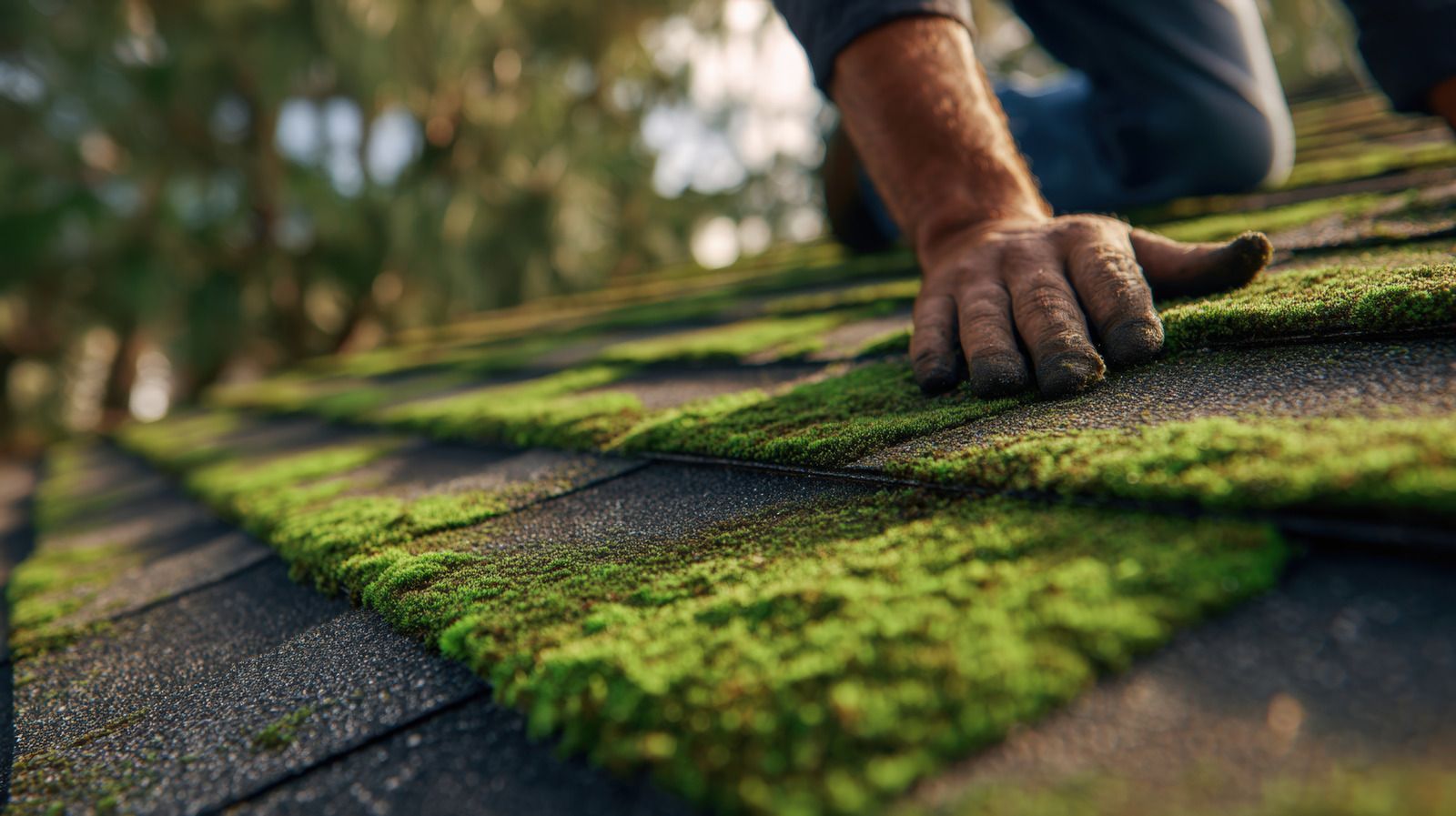
Moss isn't just a cosmetic thing. It acts like a sponge, holding water against your tiles long after the rain stops. That constant damp works into joints and under laps, and over a cold snap it can freeze, expand, and lift tiles slightly.
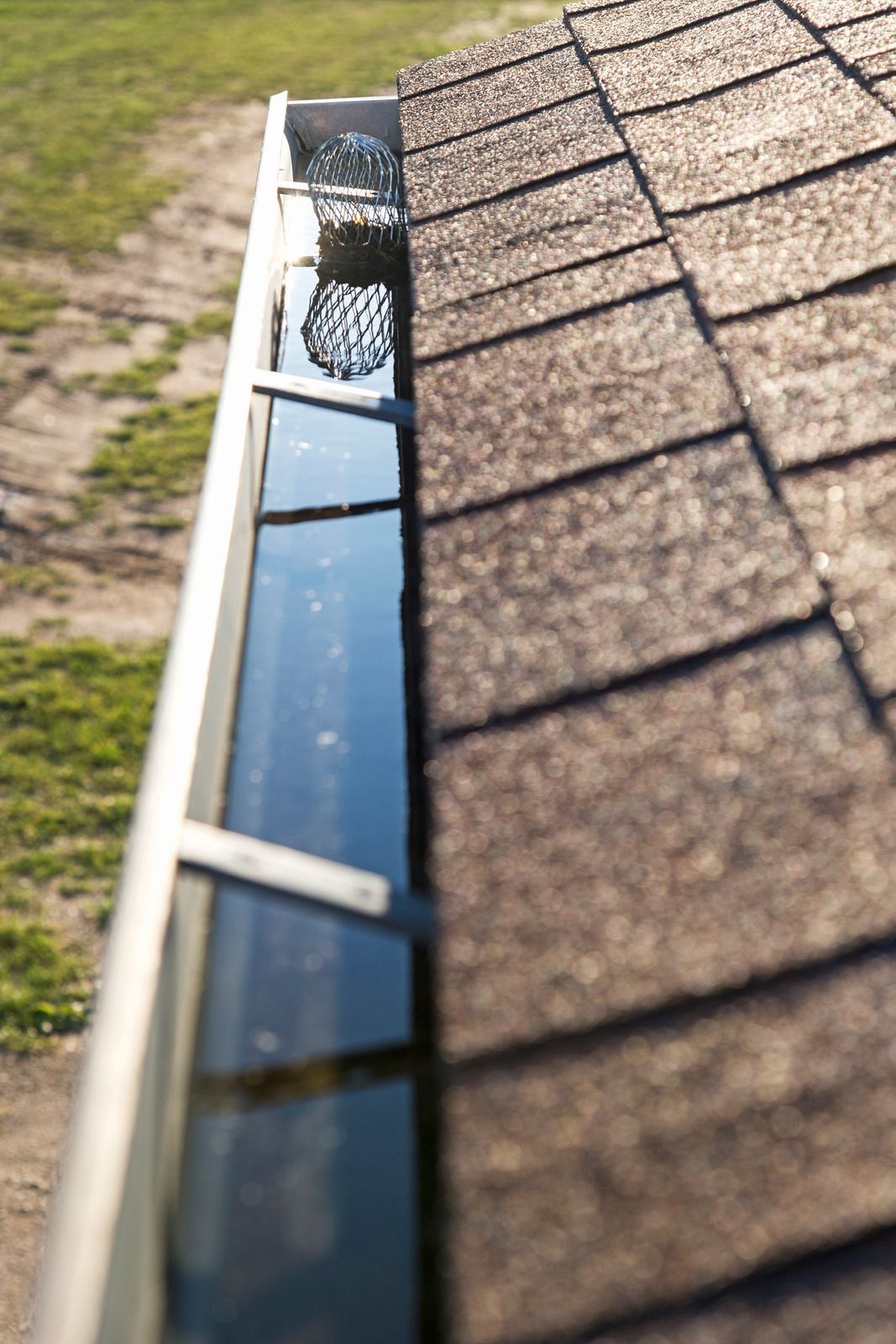
Then there's the fall. Clumps of moss break loose and slide down into your gutters. Blocked gutters back up, spill down your walls, and push damp toward the house. One problem quietly feeds the next.
Left long enough, you get moisture sitting where it shouldn't, and repairs that cost far more than a clean would have.
6. How we clear it without wrecking your tiles
We use soft washing, which means low-pressure water paired with a biocide treatment. High-pressure jet washing can strip what's left of a tile's coating and force water under the laps, so we leave that alone on delicate roofs. Gentle wins here.
The biocide keeps working after we've gone, killing off spores you can't see and slowing regrowth. Ben's Roof Cleaning has spent over 15 years cleaning roofs across Telford and Shropshire, so we know how local tiles behave and what they can take.
Here's what makes the difference on a Telford roof:
- Low pressure first: we lift moss gently rather than blasting tiles that have already lost their coating.
- Biocide treatment: it carries on killing spores for months after the visit, which matters in a damp inland spot like this.
- Gutter checks: we clear the moss that's slid down so your drainage actually works again.
- Shade awareness: we pay extra attention to north-facing slopes where growth comes back first.
Frequently Asked Questions
How often should a Telford roof be cleaned?
Most local roofs benefit from a clean every few years, though shaded or tree-lined homes may need it sooner. We can tell you what your roof actually needs after a look.
Will jet washing damage my concrete tiles?
It can. High pressure strips coatings and forces water under tiles, which is why we favour low-pressure soft washing on older concrete roofs.
Does moss really come back after cleaning?
It slowly does in a damp climate like Telford's, but the biocide we apply keeps regrowth down for a good while longer than a plain scrub would.
Is moss a sign my roof is failing?
Not on its own. It's usually just a shade and damp problem. But left for years it can trap water and lift tiles, so it's worth sorting.
Do you clean Victorian slate roofs too?
Yes. The terraces around Wellington, Dawley, and Madeley have their own quirks, and we adjust our method to suit slate rather than concrete.
Seeing green creep across your roof?
Ben's Roof Cleaning works across Telford and Shropshire, with over 15 years of experience. Get in touch or call 01952 446639
for a free, no-obligation quote.
Telford's climate makes moss a when, not an if
You can't change the damp air or move the trees, and you wouldn't want to lose the green that makes this town what it is. What you can do is stay ahead of the moss before it clogs your gutters and lifts your tiles. A gentle clean every few years keeps your roof doing its job, and keeps your house looking cared for on the street.